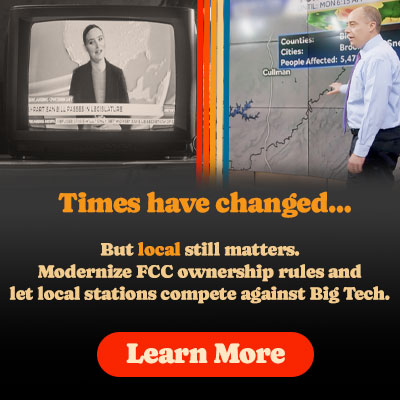
Local broadcasters keep you connected and informed. Learn about how we serve Americans every day, the economic impact we have on local communities, read stories of broadcasters' public service and more.
Visit WeAreBroadcasters.comIn 2025, local broadcasters came together to advance our shared mission of informing communities, strengthening local journalism, providing the best entertainment and keeping audiences safe. This Year in Review highlights the milestones we achieved together through advocacy, education and innovation leadership.
Strengthening Broadcasting, Empowering Local VoicesConnect With Us
1 M Street SE
Washington, DC 20003
Legal Hotline
Questions? NAB members can call our free Legal Hotline to learn more about legislation, filings and updates from Washington.
Call: (866) 682-0276
Email: legal@nab.org
Join our team of broadcast advocates. When legislative issues arise that could impact your station and career, we'll reach out and give you simple steps to contact your legislators.
Sign Up Today
The NAB Leadership Foundation works with current and aspiring leaders in broadcasting to build a more diverse, innovative and vibrant future for the industry by investing in our greatest resource: our people.
Visit NABFoundation.orgNAB Show's expansive, comprehensive conferences and workshops provide education for every storyteller.
Visit NABShow.comPILOT is a coalition of innovators, educators and advocates dedicated to advancing broadcast technologies and cultivating new media opportunities.
Visit PILOTThe premier destination for innovation – an unrivaled marketplace of bleeding-edge products, services and ideas – NAB Show drives the future of our industry across the entire workflow of creation, distribution, management and monetization.
Visit NABShow.comSign up for members-only emails and stay up-to-date on policy issues, exclusive opportunities and the latest from NAB.
The NAB blog offers fresh perspectives, policy positions and insight for broadcasters.
Visit the NAB BlogNAB's SmartBrief is a daily snapshot of broadcast industry news pulled from numerous leading media sources. SmartBrief contains summaries of the news that matters to you, written by expert editors to save you time and keep you informed and prepared.
Sign Up for SmartBriefMy NAB is a platform designed to create a more personalized and enhanced experience for our members to interact with NAB, access members-only content and easily register for programs and awards.
Visit My NABThe Broadcast Resource Hub, powered by the National Association of Broadcasters and the NAB Leadership Foundation is a comprehensive one-stop shop for resources, tools and information on the most relevant issues impacting local television and radio stations.
Visit BroadcastResourceHub.comNAB Member Services provides members with tools and resources to support their professional needs and interests. It's our mission to deliver benefits that positively impact members' business operations and career progression, as well as strengthen the future of broadcasting.
Learn MoreNational Association of Broadcasters
1 M Street SE
Washington, D.C. 20003
202 429 5300 | nab@nab.org