|
UPDATE
ON THE 2 GHZ BAS RELOCATION PROJECT
On February
12, 2009, Sprint Nextel, the Association for Maximum Service Television,
NAB, and the Society of Broadcast Engineers (referred to as the
Joint Parties) filed with the FCC a Supplemental Joint Request
to waive until February 7, 2010 the deadline by which Sprint Nextel
must complete the relocation of the Broadcast Auxiliary Service
(BAS) licensees in the 1990-2025 MHz band. The request cites numerous
circumstances beyond Sprint Nextel’s and broadcasters’
control, which will prevent completion of the BAS transition by
the current deadline.
The BAS relocation
project started in 2005, when Sprint Nextel committed to the relocation
of BAS incumbents in the 1990-2025 MHz band, with planned completion
in 2007. The FCC subsequently granted the parties a waiver to
provide additional time to complete the project, extending the
relocation deadline to March 5, 2009 and holding in abeyance an
original waiver request, which asked that the relocation deadline
be extended to February 7, 2010.
The
purpose of the relocation is to free up 35 MHz of spectrum, previously
assigned for BAS, and now allocated to the 2 GHz Mobile-Satellite
Service (MSS), of which a portion (5 MHz) was assigned to Nextel
Communications for cell phone services. This is being achieved
by shrinking the existing seven 17 MHz BAS channels to become
12 MHz channels, and moving the channels to new frequency assignments.
This is a two-stage process for each DMA, as shown in the following
chart.

Edited extracts
from the Supplemental Joint Request follow, with graphics taken
from a subsequent ex parte communication submitted on February
26.
Introduction
and Summary
 In
a March 2008 order, the Commission granted a waiver request filed
by Sprint Nextel, MSTV, NAB, and SBE to provide additional time
to complete the transition of BAS licensees to the new 2 GHz band
plan. The Commission found that numerous complexities beyond the
control of Sprint Nextel and BAS licensees prevented completion
of the BAS relocation within the Commission’s original timeframe.
The Commission extended the deadline until March 5, 2009 and expressly
held open “the option of extending this waiver upon further
consideration.” The Commission also held in abeyance the
Joint Parties’ waiver request for additional time beyond
March 5, 2009 to complete the BAS transition. By this filing,
the Joint Parties respectfully renew their original request to
extend the BAS relocation completion date to February 7, 2010. In
a March 2008 order, the Commission granted a waiver request filed
by Sprint Nextel, MSTV, NAB, and SBE to provide additional time
to complete the transition of BAS licensees to the new 2 GHz band
plan. The Commission found that numerous complexities beyond the
control of Sprint Nextel and BAS licensees prevented completion
of the BAS relocation within the Commission’s original timeframe.
The Commission extended the deadline until March 5, 2009 and expressly
held open “the option of extending this waiver upon further
consideration.” The Commission also held in abeyance the
Joint Parties’ waiver request for additional time beyond
March 5, 2009 to complete the BAS transition. By this filing,
the Joint Parties respectfully renew their original request to
extend the BAS relocation completion date to February 7, 2010.
Since 2005,
Sprint Nextel has funded an increase of at least 1,000 American
workers across manufacturers, integrator vendors, and service
providers. These engineers, technicians, tower climbers, machinists,
welders, metal workers, laborers and others have made great progress
in clearing the 1990-2025 MHz band of incumbent BAS operations.
To date, more than one-third of BAS licensees have completed the
transition. The transitioned licensees span 76 television markets
that cover approximately 104 million Americans. More than 99 percent
of all eligible BAS licensees have signed frequency relocation
agreements (FRAs) that specify the equipment, labor, terms and
conditions necessary for their transition to the new band plan.
And even in those markets yet to be transitioned, hundreds of
licensees have already installed replacement BAS equipment or
are actively working with vendors and manufacturers to complete
the equipment ordering and installation process. In short, BAS
relocation is well on the road to completion.
In their original,
September 2007 waiver request, the Joint Parties requested that
the Commission extend the BAS completion date to February 7, 2010.
In December 2007, the Joint Parties supplemented their waiver
request after conferring with numerous parties, including Mobile
Satellite Service (MSS) licensees, who will occupy more than half
of the cleared spectrum and wanted the Joint Parties to reprioritize
previously scheduled market transitions. In their supplemental
filing, the Joint Parties proposed streamlining measures, faster
transitions in specified markets to accommodate the MSS licensees’
testing and service requirements, and a tentative schedule that
potentially could accelerate the BAS transition by up to five
months. The Joint Parties emphasized the tentative nature of the
accelerated schedule due to the inherent complexities of BAS relocation
and “the fluid nature of a relocation process that depends
on the cooperation of scores of different suppliers, integrators,
contractors, programmers, installers, and consultants.
Since the
Extension Order, Sprint Nextel and the broadcast community have
used their best efforts to meet the accelerated schedule. These
efforts have made the transition more efficient in a number of
respects and fully met MSS market-access demands; nonetheless,
the BAS transition remains a complex undertaking with new challenges
and obstacles seeming to arise at every turn. For example, Congress’s
recent extension of the digital television (DTV) transition deadline
will affect the BAS relocation process due to interdependencies
between the two transitions. Thus, despite the good faith efforts
of Sprint Nextel and the vast majority of broadcasters, it is
now clear that completing the BAS transition will require until
February 2010 as described in the Joint Parties’ original
waiver request.
Work to
Complete the BAS Transition
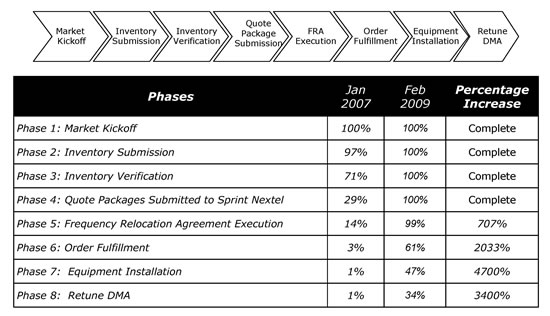
The Joint Request goes on to document the substantial progress
made in compiling inventories, obtaining quote packages for virtually
all eligible BAS incumbents, and executing frequency relocation
agreements for 99% of eligible BAS licensees. It also states that
nearly all licensees have submitted purchase orders for their
BAS replacement equipment, and more than 70% of equipment has
been delivered to licensees. At this time, 46% of licenses have
installed their equipment and 36% of primary BAS operators have
completed the transition. The Request confirms that the new BAS
equipment and band plan meets broadcaster newsgathering needs
and that markets can be transitioned without materially disrupting
BAS operations. It also states that the success to date “could
not have been achieved without the good faith efforts and commitment
of the nation’s broadcasters” and explains the efforts
that are underway to complete the transition by the date requested,
noting that Sprint Nextel has a powerful incentive to complete
the BAS relocation as soon as possible.
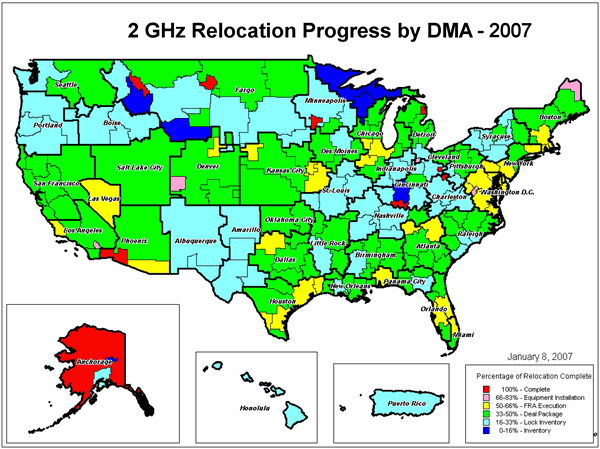
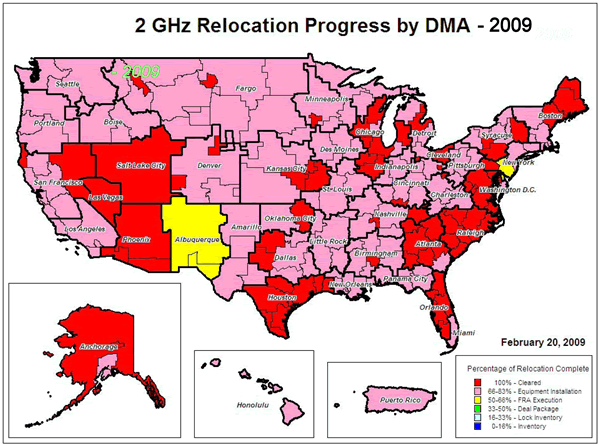
The chart
and maps below showing this 2 GHz transition process and progress
from 2007 to 2009 were included in the ex parte filing.
Relocation Challenges
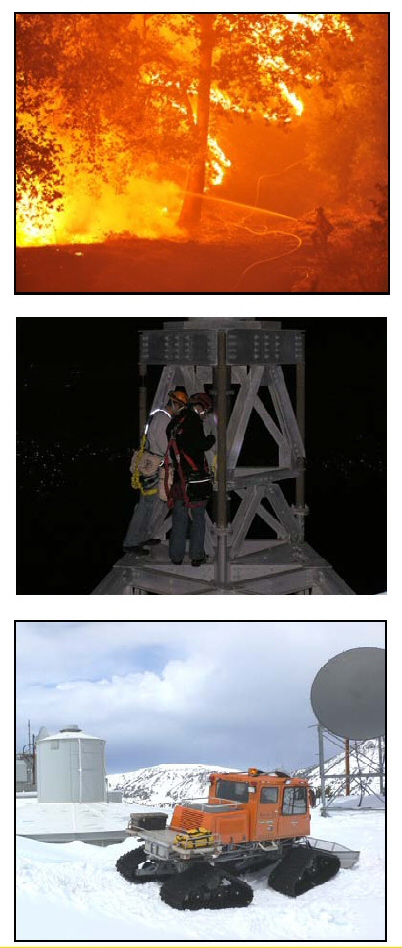
The Joint Request provides an analysis of the many challenges
that Sprint Nextel and the broadcaster community continue to face
in the BAS transition, including those listed below.
Complexity of BAS Transition
Delays Caused by Weather and Other Emergencies
Market-Prioritization Demands of MSS Licensees
Avoiding Material Disruptions to Broadcaster Operations
Delay in TV Transition
Competing Priorities for Vendors
Bankruptcy Filings:
- Pappas Telecasting – thirteen BAS systems
- Tribune Company – nineteen BAS systems
- Young Broadcasting – thirteen BAS systems
Tower Climbing Hazards
State Contracting Requirements
Helicopter Constraints
Aviation Disasters and Capacity Limitations
Competing Priorities for Vendors
Capacity Limitations
Helicopter Constraints
State Contracting Requirements
Live News
Coverage Must be Protected
The Request stresses that the Joint Parties believe that it is
extremely important that BAS operations remain free from interference
until the transition is complete. It states that, “Broadcast
television serves as an important source of news for local communities
and the entire country. As both Congress and the Commission have
recognized, the provision of local news and emergency information
is a cornerstone of communications policy in the United States.
This goal will be undermined if the key element in the provision
of local news, i.e., live reporting using electronic newsgathering,
is subject to interference. Accordingly, combined with the Joint
Parties’ commitment to work with MSS interests in satisfying
their independent obligation to relocate BAS, the Joint Parties
request that the Commission take such actions as are necessary
to prevent interference to both ENG and fixed operations on BAS
frequencies until this transition is complete.”
Status
On February 27, 2009, the FCC waived the relocation deadline for
a period of 45 days, until April 19, 2009, in order to provide
the Commission with time to consider the issues raised by the
Supplemental Request. On March 9, opposition to the Request was
filed by ICO Satellite Services, one of the MSS licensees, with
further comments from Terrestar, the other licensee. Reply comments
from the Joint Parties were filed on March 19, rebutting the objections
to the extension. The matter currently rests with the Commission.
Click
here for the full text of the Supplemental Joint Request Concerning
the BAS Relocation. Further information on the 2 GHz relocation
project is at: www.2ghzrelocation.com.


The
March 30, 2009 TV TechCheck is also available
in an Adobe Acrobat file.
Please click
here to read the Adobe Acrobat version of TV TechCheck.
|