|
Tom
Silliman and Tony Uyttendaele to Receive
2008 NAB Engineering Achievement Awards
Radio Engineering
Achievement Award Winner
Thomas B. Silliman
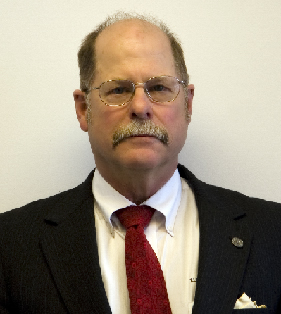 Tom
Silliman is often called a Renaissance man due to his varied passions.
But, he is best known for his accomplishments in the field of
antenna engineering for the broadcast industry as President of
ERI Inc. Tom
Silliman is often called a Renaissance man due to his varied passions.
But, he is best known for his accomplishments in the field of
antenna engineering for the broadcast industry as President of
ERI Inc.
Tom began
his career as a consultant, working with his father in the engineering
firm Silliman & Silliman. In the 1970s he developed a design
for what would become the patented ROTOTILLER® antenna - a
circularly polarized FM broadcast antenna. Electronics Research
Incorporated (ERI), owned by the Sillimans, began manufacturing
the ROTOTILLER which rapidly became a popular antenna choice for
FM stations in the U.S.
In-Band On-Channel
(IBOC) digital broadcasting technology demandednew antenna innovations
for broadcasters. Under Tom's leadership, ERI developed a dual
feed antenna system designed to accommodate stations' analog and
digital transmissions. A noted expert with multi-station transmitter
sites is legendary. ERI antenna and combining systems are used
at major sites around the country including the recent Four Times
Square installation in New York City.
In 2003, building
on the strengths of ERI, Tom led the company in its successful
efforts to acquire Andrew Corporation's Broadcast Products Business.
Today, ERI is considered one of the world's top suppliers of radio
and television transmission components.
You will recognize
Tom as the guy on a tower hundreds of feet off the ground in a
variety of ERI advertisements - he's an expert climber and tower
rigger. He is a friend to many broadcasters, always willing to
help solve problems; and Tom takes the time to carefully explain
complex RF issues to anyone willing to take the time to learn.
Tom's father,
Robert M. Silliman won the NAB Engineering Award for Radio in
1993.
Television
Engineering Achievement Award Winner
Antoon (Tony) Uyttendaele
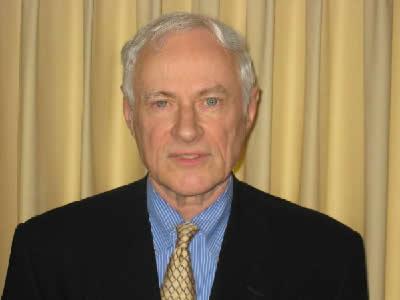 Tony
spent 25 years of his career with ABC, Inc., in positions of increasing
responsibility. Officially retired in 2000, as Senior Advisor,
Science & Technology, he continues to consult for ABC on a
part time basis. Preceding employment by ABC; he worked for Harris,
RCA (several countries) and PYI Ltd., mostly making broadcast
facilities become operational realities worldwide. He was graduated
magna cum laude in Engineering from the National Radio and Film
Institute in Brussels, Belgium. Tony
spent 25 years of his career with ABC, Inc., in positions of increasing
responsibility. Officially retired in 2000, as Senior Advisor,
Science & Technology, he continues to consult for ABC on a
part time basis. Preceding employment by ABC; he worked for Harris,
RCA (several countries) and PYI Ltd., mostly making broadcast
facilities become operational realities worldwide. He was graduated
magna cum laude in Engineering from the National Radio and Film
Institute in Brussels, Belgium.
Perhaps most noteworthy of Tony's accomplishments is his pivotal
and unrelenting role in making 720p a reality, from being an early
supporter and promoter of progressive scan formats to final adoption
by the ITU (ITU-R BT.1543) and implementation by several major
broadcast networks. Prior to ABC announcing the adoption of the
720p HDTV format for production and transmission, Tony and his
engineering colleagues had to convince many equipment manufacturers
that they should develop 720p hardware. This they did by visiting
all major Japanese broadcast equipment manufacturers as well as
some consumer equipment manufacturers. In the process he made
dozens of presentations positing the benefits, addressing comments
from the skeptics, including convincing the Grand Alliance to
change from the original 787.5 to 750 lines. At the same time
he prepared, with the help of Panasonic and NTV (Japan), a draft
SMPTE document for 720p. This formed the basis for what became
SMPTE 296M.
For about
10 years, Tony was the international chairman of the ITU-R Working
Party on SNG. This Working Party developed many Recommendations
on uniform standards and operating procedures to make SNG practical
worldwide. Tony has contributed to the industry in many other
ways, as a member/participant of numerous engineering committees
such as NAB, MSTV, ATSC, ATTC, FCC ACATS, FCC Advisory Committee
on two-degree satellite spacing, CATS/ATRP (MIT), EIA (RS-250B),
NABA, IEEE TAB NTDC (New Technology Directions Committee), ITU
Task Groups, Working Parties and Study Groups.
For the ABC
Television Network, Tony also developed and managed the implementation
of the C-Band satellite network distribution system. He designed
the uplink facility at ABC's Broadcast Centers in Manhattan and
Hollywood and coordinated interference clearance with all the
common carriers that share the same frequency band as a requirement
to obtain an FCC license. The uplink facility at ABC's Broadcast
Center in Manhattan is unique in that it is the only C-Band video
uplink in Manhattan.
Tony was also
the chairman of the ATSC Specialist Group on Ghost Canceling.
After more than three years, studying, evaluating and testing
all proposed ghost canceling signals, this activity resulted in
the adoption of the ghost canceling (CGR) reference signal standard,
subsequently adopted by the FCC. This GCR signal has been widely
adopted by countries in addition to the U.S. and is the subject
of an ITU-R Recommendation. This technology is still in use today
in the U.S. in professional receivers for improving the quality
of NTSC translators and repeaters.
The Engineering Achievement Awards will be given at the NAB Show
Technology Luncheon on Wednesday April 16, 2008 in the Las Vegas
Hilton. The luncheon will be sponsored by Samsung.

The February 25, 2008 Radio TechCheck is also
available in an Adobe Acrobat file.
Please click
here to read the Adobe Acrobat version of Radio TechCheck.
|

