|
International Research Park at the 2010 NAB Show
There will be a new area at the NAB Show exhibition in Las Vegas
this year - the International Research Park. This is intended
to highlight research and development in leading-edge media technologies
from the United States and around the world. Exhibits will feature
advanced projects now under way in academic, government, and commercial
research laboratories, including technologies and equipment not
yet commercially available that push the envelope for content
production, processing, distribution, broadcast, display and interaction
with the consumer.
Lynn Claudy, NAB Senior Vice-President of NAB Science and Technology,
said: "The International Research Park extends the scope of exhibits
at the NAB Show to go beyond the range of commercial products
that are available currently or in the immediate future. This
technology-rich exhibit area will feature the work of start-ups,
established companies and research organizations around the world
as they work on innovations and fundamental technology breakthroughs
that may have an impact on the media landscape over the next several
decades. The wide range of exhibits includes topics as diverse
as media services for the future, fundamental imaging and audio
research, innovative use of broadcast spectrum, new technological
innovations in transportable portable power generation and lighting,
3D research and advanced production technology for media services,
among others."
The International Research Park is located at the east end of
the South Lower Hall of the Las Vegas Convention Center. What
you see there today may change the way the industry works tomorrow
- don't miss it! A summary of the confirmed exhibitors and technologies,
with information provided by the participants, is as follows.
2020 3D Media Research Project - Europe
Members from this consortium exhibiting at NAB will include JRS, Technicolor, University of Hasselt and Barcelona Media. They will present:
- Trifocal rig and a super high bandwidth video recorder from
Technicolor,
- New spatial audio processor from Barcelona Media,
- Image processor from JRS to segment and extract features from
stereoscopic sequences,
- Panoramic video tools from the University of Hasselt, including
two panoramic super high resolution camera rigs.
Burton Inc, Japan
This project includes participants from Hamamatsu Photonics and
the University of Keio. Most current 3D displays draw pseudo-3D
images on 2D planes by utilizing the human binocular disparity.
However, many problems occur, e.g., the limitation of the visual
field, and the physiological displeasure due to the misidentification
of virtual images. To overcome these problems, we have developed
a "True 3D Display" which can produce a bright dot in the air
so audience can see 3D images in true 3D space.
Our display device uses the plasma emission phenomenon near the
focal point of focused laser light. By controlling the position
of the focal point in the x, y, and z axes, it displays real 3D
images constructed by dot arrays in the air.
Communications Research Center, Canada
CRC is the Canadian government's primary laboratory for research
and development in advanced telecommunications. The broadcast
technology R&D program encompasses advanced audio and video systems,
audio/video perception and quality evaluation, digital television,
3D TV, digital radio broadcasting and multimedia broadcasting
systems and applications. Demonstrations will comprise:
- Real-time 2D to 3D conversion technique for 3D-TV applications,
- Video Frame rate conversion technology,
- CRC's audio software: SEAQ, TimeSync and Loudness Meter,
- Open Broadcast Platforms: a strategic tool for innovation
and development of new broadcast applications; an open source
software framework that enables broadcast transmission and reception
on open handhelds based on Openmoko and Android.
CTB Group
CTB is addressing the growing demand for mobile broadband Internet
and content delivery services by developing a nationwide broadband
mobile content delivery network that bypasses existing carrier
networks for downstream data. They use the new ATSC Mobile DTV
standard to deliver broadband data, video and IP content on a
broadcast basis via its proprietary Cellular Terrestrial Broadcasting
technology.
The CTB network utilizes existing television spectrum and will
be implemented using licensed UHF TV spectrum obtained through
purchase, lease or direct application to the FCC. CTB's network
works as a complement to any existing unicast cellular network
and is compatible with any WiFi enabled devices, including cell
phones, Smartphones, Netbooks, laptops and televisions.
Entertainment Technology Center, Carnegie Mellon University
The Entertainment Technology Center (ETC-Global) will be bringing
three technologies to the show:
- Synthetic Interview - a software technology and design process
that creates a humanlike interface with multimedia. Synthetic
Interviews allow people to chat in natural language and the
responses give the user the apparent experience of interacting
with a live person. Synthetic Interviews have been created of
celebrities such as sports figures, actors, and experts such
as doctors. Historical figures have also been brought back to
life, including Albert Einstein, Charles Darwin, Ben Franklin,
and Abraham Lincoln.
- Digital Video Library Technology - a suite of computer technologies
delivering speech, image, and natural digital video repositories,
with strategies for improving the utility of metadata. Interfaces
building from automatically generated metadata are presented
with broadcast news and oral histories as examples, illustrating
the use of video surrogates in multimedia information systems.
- Balli Plastici - a re-imagining of the 'plastic dance' created
by Italian Futurist Fortunato Depero in 1918. The marionettes
used in the dance encapsulate the Futurist ideal of machinery
striving to break free of human control. Our goal is to digitize
Depero's puppets and develop a toolkit anyone can use to create
their own Futuristic-inspired ballets.
ETRI, Korea
The Electronics and Telecommunications Research Institute is
Korea's largest government-funded research institute specializing
in information and communications technology. Guided by its vision
of "The World's Best Leader in Human Technology," ETRI strives
to develop new technologies in this era of digital convergence
wherein technologies, industries, services and networks are converged
and combined so that mankind can lead a more pleasant, convenient
and safer life. They will be showing two projects:
- Advanced T-DMB - since the commercial launch of Terrestrial
Digital Media Broadcasting in 2005, more than 20 million T-DMB
receive units have been sold in Korea. But T-DMB has a weak
point in that it has less channel capacity compared with competing
mobile TV services. Advanced T-DMB is backward compatible with
T-DMB, still provides wide service coverage with low transmission
power, and its increased channel capacity is at maximum up to
twice the channel capacity of T-DMB. To make this possible,
AT-DMB has adopted some technologies such as hierarchical modulation,
turbo code and others.
- Additional data transmission for DTV using ATSC TxID technology.
The applications for this technology include digital signage,
NRT-like broadcasting service, emergency alerting and an optional
small video broadcasting service.
Georgia Institute of Technology
The School of Electrical and Computer Engineering at Georgia
Tech will showcase some of their media-related development work
including:
- Touch-free and wireless human-TV interface enabled by hand
gestures and a single webcam,
- Bandwidth-efficient multiscreen variable bit-rate HD/3D video
streaming HD video quality enhancement via error concealment,
- Android set-top box and HDTV,
- Intelligent activity detection for video surveillance and
teleheath applications, including suspicious activity detection
and human fall detection, using a live HD video streaming system.
IT Innovation Centre at the University of Southampton, UK
This research organization will exhibit a range of state of the
art digital media projects including:
- ANSWER - a new approach to the creative process of film and
game production,
- IRMOS - Interactive Real Time Multimedia Applications on Service
Oriented Infrastructures,
- AVATAR - a research and development project that has brought
together experts in archiving, broadcast technology, data storage,
algorithms and modeling, to develop a family of technologies
that can dramatically improve the utility of digital file storage
for audio/video archiving,
- MUPPITS - a research and development project set up to address
the ever increasing challenges faced by the post production
industry today, caused by the adoption of increasingly complex
processing requirements and the adoption of tapeless workflows,
- PrestoPrime - keeping audio visual contents alive.
NHK Science and Technology Research Laboratories, Japan
This major broadcast research laboratory will have exhibits providing information on current research projects including 3D TV, Internet services, next generation broadcasting, advanced production technologies and others. They will also show a roadmap for the introduction of Ultra HDTV and give guidance on the NHK technology transfer policy.
Rochester Institute of Technology
The School of Film and Animation at RIT will show two of its current
projects.
- The tangiBook™,
a tangible interface that allows natural interaction with virtual
surfaces. The system is based on a laptop computer that incorporates
an accelerometer and a webcam. Custom software allows the orientation
of the screen and the position of the observer to be tracked in
real-time. Using this information, realistic images of surfaces
with complex textures and material properties illuminated by environment-mapped
lighting, are rendered to the screen. Thus the tangiBook allows
virtual surfaces to be observed and manipulated as naturally as
real ones. We demonstrate the utility of the tangiBook in three
application areas: material appearance research, softproofing
of digital prints, and enhanced access to collections in digital
libraries and museums.
- High resolution, high dynamic range display system for
vision research. Conventional displays only produce moderate luminance
levels and limited contrast ranges, constraining their utility
as tools for exploring visual response. We have developed a high
dynamic range display that can produce high resolution luminance
levels and contrasts greater than 40,000:1 - on the order of those
encountered in real world scenes. We are using the display for
material perception studies, where high intensity specular reflections
are important, and for low vision research, where deficits often
appear at extreme luminance contrasts.
Ryerson
University, Canada
Graduate students from the Rogers Communications Center at Ryserson
University will show three projects.
- New
Tools for Collaborative Design and Communication - this work originally
focused on extending an open-source videoconferencing application
to allow for high-definition visualization, as well as remote
control of computing resources across geographic divides. We also
set out to reduce cultural barriers to collaboration by developing
a suite of tools that facilitate real-time captioning and translation.
The final component of our project considers the business potential
of the related technology, and the viability of enhancing our
tools with Semantic Web Services.
- Educational Applications of Blu-ray DVD Technology - this
project demonstrates an application that adapts Blu-ray's interactive
capabilities, including BD Live, for use in the production of
educational media. The project successfully proves that Blu-ray
is a superior technology for producing learner-centered educational
materials, an area that it was not initially designed for.
- Zero Latency HD Broadcast Double Enders Over IP - demonstrates
the feasibility of using high-end HD video streaming technology
to support live broadcasting or the transmittal of broadcast quality
content on existing IP networks. We will be using ultra low-latency
HD video streaming technology to transmit television interviews
from remote locations, using standard IP and the ORION network.
Applications will provide educational as well as broadcast networks
a permanent and lower cost alternative to high cost satellite
and fibre feeds.
Sandia
National Laboratories
The consortium for this project includes Multiquip, Luxim, Altergy
Systems, and Stary Light Optical. The DoE Fuel Cell Technologies
Program and Sandia seek to accelerate the commercialization and
promote the early adoption of hydrogen and fuel cell technologies
for the film and broadcast industries, including a Fuel Cell Mobile
Light. Features include:
Fuel Cell
High power density with low weight and volume
Fast start, excellent durability
Uses pure H2 from storage system
Oxygen obtained from ambient air
43% efficiency
No CO2, NOx or particulates emitted
No Moving parts, very quiet operation
Lighting System
High efficiency -120 lumens/watt
50,000 hour lifetime
Color rendering up to 96 CRI
Instant-on, dimmable to 20%
Rapid re-strike
Compact source (1/4"x1/4")
No audible noise or flicker
Programmable
Indoor and outdoor Use
SCTI
Speech Conversion Technologies Inc., partly funded by the NAB
FASTROAD program, will be showing their advanced technology for
highly accurate automatic speech recognition and conversion, for
closed captioning and language translation applications.
Syncbak,
Inc.
Syncbak is a media technology company that is creating a hybrid
broadcast technology to enable local broadcasters to authenticate
and connect with local viewers using the ATSC A/90 Data Broadcasting
Standard. Once authenticated via return path (IP), broadcasters
are then able to reach these viewers with new products and services,
both over-the-air and over-the-web.
For more
information about the 2010 NAB Show and for online registration,
please see: www.nabshow.com/.
MEDIA
TECHNOLOGY EXPERT SHELLY PALMER TO SPEAK AT NAB SHOW TECHNOLOGY
LUNCHEON
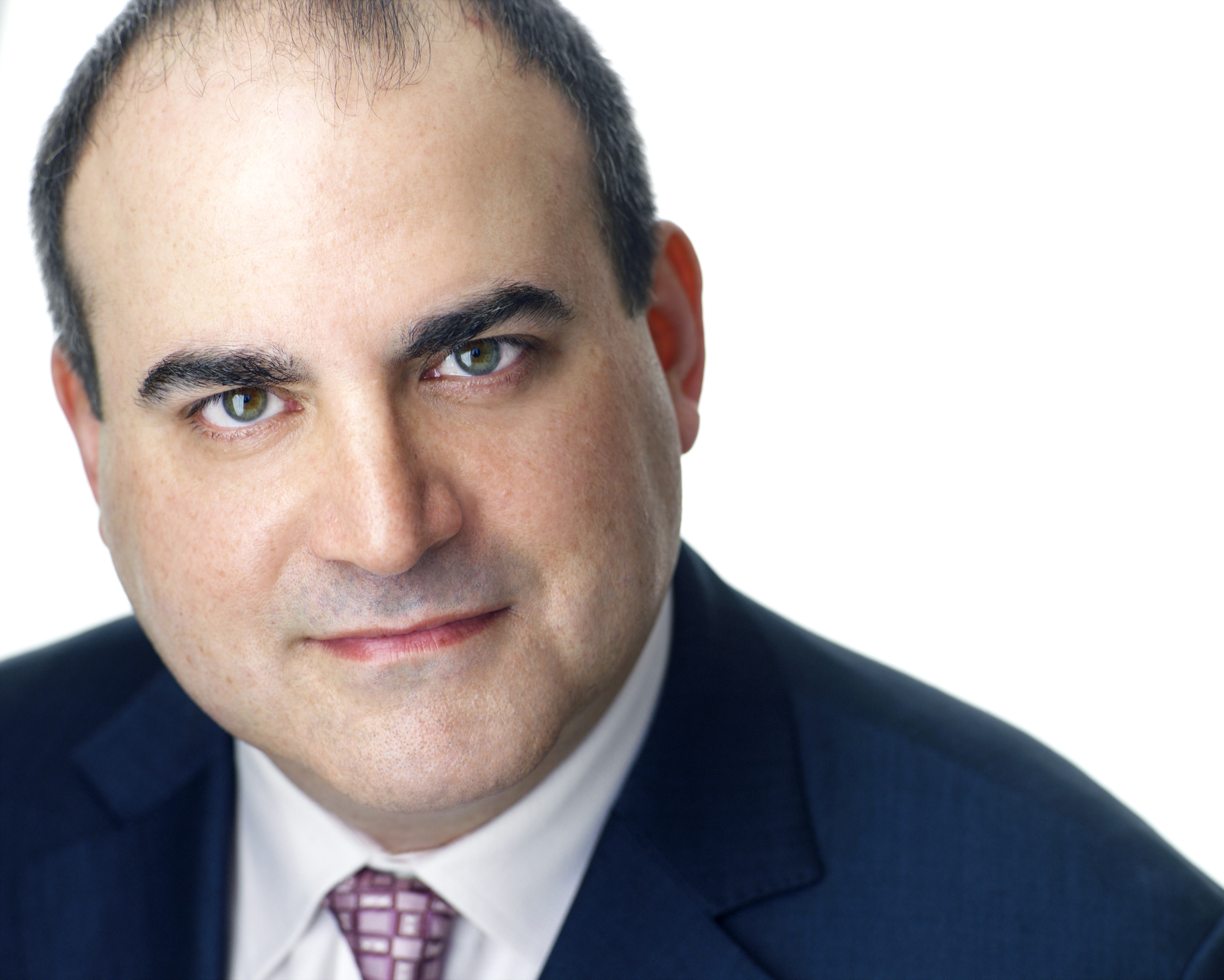
Shelly Palmer,
TV host, author and media technology commentator, will speak at
the Technology
Luncheon on Wednesday, April 14 in the Las Vegas Hilton. During
the Luncheon, sponsored by LG Electronics, Palmer will discuss
the sociological and technological forces that are reshaping the
future of traditional media.
Palmer is
the host of "Digital Life with Shelly Palmer," a weekly
television show that airs on WNBC-TV New York, about living and
working in a digital world. He also produces and hosts "MediaBytes,"
an online daily news show that features a unique take on the biggest
stories in technology, media, and entertainment. Known for his
insightful commentary on the technology issues of today, Palmer's
years of experience in the media industry include serving as the
patented inventor of the underlying technology that created Enhanced
Television for ABC, an application used in programming like "Who
Wants to Be a Millionaire" and "Monday Night Football."
A renowned
author and journalist, Palmer is a weekly columnist for the Jack
Myers Media Business Report, The Huffington Post, and
is a technology commentator for CNN.com. In 2008, Palmer released
the updated version of his 2006 book, titled Television Disrupted:
The Transition from Network to Networked TV (2nd Edition),
a book that describes the technological, economic, and sociological
forces that are changing the television industry.
The Luncheon
is a celebratory event for technologists, engineers, technical
managers and all technology fans that attend the NAB Show. As
previously
announced, the Technology Luncheon will also feature the presentation
of the NAB Engineering Achievement Awards, given this year to
Steve
Church, founder and CEO of Telos Systems; and Mark
Richer, president of the Advanced Television Systems Committee
(ATSC).
The Technology
Innovation Awards, created in 2009, which recognize organizations
that bring technology research exhibits and demonstrations of
exceptional merit to the NAB Show will also be presented at the
Technology Luncheon.
Finally,
the new NAB Best Paper Award honors the author(s) of a paper of
exceptional merit published in the NAB Broadcast Engineering Conference
Proceedings. The Proceedings is a compendium of these technical
papers, and an important archive of the leading edge of broadcast
engineering issues. Being presented for the first time at the
2010 NAB Show, the recipient of the award will be honored at the
NAB Technology Luncheon
Tickets are
available with registration packages or can be individually ordered
at www.nabshow.com.
2010 NAB
Broadcast Engineering Conference Summary of Presentations
Check out
the papers
that will be presented at the 2010 NAB Broadcast Engineering Conference
in Las Vegas, April 10-15, 2010.
ADVERTISEMENT

|
ADVERTISEMENT

|
The
March 22, 2010 TV TechCheck is also available
in an Adobe Acrobat file.
Please click
here to read the Adobe Acrobat version of TV TechCheck
|

