|  |  |

|
iBiquity Develops New AM Radio Data Service Concept NAB FASTROAD (www.nabfastroad.org) last week announced the release of a report on a new AM radio data service concept, with the potential to provide AM broadcasters the ability to transmit low-rate data similar to what analog FM broadcasters can provide using the Radio Data System (RDS) subcarrier. This work was undertaken by iBiquity Digital Corporation (Columbia, Md, www.iBiquity.com), developers of the HD Radio IBOC system used by U.S. broadcasters to transition to digital radio, and was co-funded by iBiquity and NAB FASTROAD. 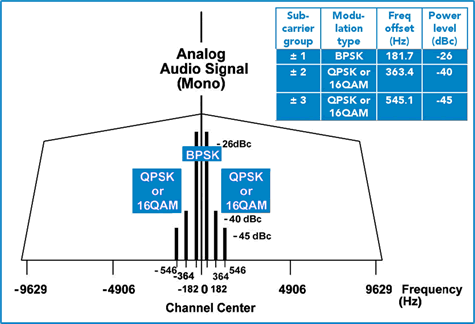
Called the AM Digital Data Service (ADDS), this new technology would utilize a small number of IBOC digital subcarriers (either two, four or six) to provide a data capability (but no digital audio) similar to RDS for analog FM. Because analog AM radio stations have no method for transmitting data such as song title and artist, there is a need for an AM data transmission service that provides capabilities similar to FM RDS and can support delivery of low data-rate text. This technology could be easily and affordably integrated into future versions of IBOC receivers but existing IBOC receivers (and analog-only receivers) would not be able to decode the ADDS signal. As described in the report, from one to three digital subcarrier pairs would be used to transmit digital data, as shown in the figure. These subcarriers would reside “underneath” the existing analog AM audio signal, which is represented in the figure by the trapezoidal shape which extends symmetrically about the channel center out to approximately ±10 kHz. Each subcarrier’s power level is set to ensure robust reception of the digital data, while minimizing interference to the host analog audio. The levels shown in the figure are based upon an analytical study which is summarized in the report, and would, in a future phase of the program (not currently planned), be verified in laboratory and field testing of the system. The ADDS system borrows heavily from the digital broadcast design defined for HD Radio AM Hybrid transmission. The design establishes symbol durations, subcarrier spacing, and sample rates consistent with HD Radio broadcasts. These design requirements ensure robust reception and allow for compatibility with existing HD Radio receiver applications. Depending upon the number of subcarriers and the type of modulation, data rates from approximately 90 to 1000 bits per second would be supported by ADDS. By comparison, the RDS signal has a bit rate of approximately 1,200 bits per second. ADDS is designed to support text messaging and data transmission associated with audio program content. Proposed “use cases” include station service messages, alert messages, and program service messages. These system definitions are identical to the corresponding definitions in the HD Radio system standard; additional information on two of these use cases is provided here: Station Message Service (SMS) – the station message service is intended to identify station-related configuration and important messages to the listener. The station message service provides, but is not limited to, the following: station call letters, station message (examples include public service announcements, weather reports or telephone call-in numbers). This service borrows definitions from the HD Radio Station Information Service (SIS); Program Service Data (PSD) – the program service data is intended to describe the content of the current audio program. The PSD service provides, but is not limited to, the following messages: title, artist, album, genre, content, commercial. This service borrows definitions from the HD Radio Program Service Data (PSD). One of the benefits of ADDS is that it would offer AM broadcasters a simpler and less-expensive way to provide a (limited) digital service compared to a full AM IBOC installation which at present is the only option. Also, the requirements on the antenna system for ADDS would be the same as for analog AM and not the more stringent requirements of AM IBOC. This is important because antenna tuning (usually necessary when upgrading existing AM broadcast facilities from analog AM to HD Radio specifications) has been one of the major tasks needed to get AM IBOC stations functioning and on-the-air. The full text of the ADDS report and information on the NAB FASTROAD technology advocacy program are available at www.nabfastroad.org. Future work on this project will depend upon a number of factors including whether the broadcasting and receiver manufacturing industries embrace this concept. Comments and other feedback on ADDS are encouraged – please contact NAB Science and Technology Senior Director, Advanced Engineering David Layer at dlayer@nab.org. |
|
Nominate the Best! NAB is currently accepting nominations for the 2011 NAB Engineering Achievement Awards. Established in 1959, the NAB Engineering Achievement Award is presented each year to an individual for their outstanding accomplishments in the broadcast industry. In 1991, NAB began giving awards separately for achievements in radio and television. The award winners will be recognized at the Technology Luncheon at NAB 2011 on April 13 in Las Vegas, Nev. Additional information and nomination form is
available at http://www.nab.org/events/awards/entryRules.asp?id=1991.
The deadline for nominations is January 21, 2011.
The December 20, 2010 Radio TechCheck is also available in an Adobe Acrobat file. Please click here to read the Adobe Acrobat version of Radio TechCheck. |