|
 |
 |

|
Maintaining Streaming Audio Quality Many radio
broadcasters now offer streaming audio versions of their on-air
signals to listeners. In an interesting presentation at this year’s
Radio Show, Clear Channel
Radio’s EVP of Engineering & It’s not surprising that Clear Channel would be focusing on this, given their strong commitment to streaming as evidenced by the “iHeartRadio” streaming platform. Clear Channel recently released a new version of iHeartRadio on September 23 at the iHeartRadio Music Festival in Las Vegas, Nevada. Currently, iHeartRadio features over 800 live broadcast and digital-only radio stations from 150 cities, and now includes support for user-created “custom stations.” According to Clear Channel, iHeartRadio has 50 million listening hours a month and there have been 34 million downloads of iHeartRadio mobile apps allowing users to listen to streaming audio over WiFi and mobile broadband services. During his presentation, Jeff said that a significant number of technical issues arise with streaming technology for both radio stations and users, including such things as encoder problems, temporary loss of Internet service (for both stations and listeners), and missing or incorrect metadata (including information on song title, artist and album). According to Jeff, outage problems have proven to be more of an issue with online listeners than with over-the-air listeners, and that even short outages can lead to “listener abandonment.” In 2009, Clear Channel embarked upon a “live streaming improvement plan” to realize “24 x 7” operation of their streams, in effect deciding to treat streaming systems like the main transmitters at their stations from a reliability point of view. Jeff spent the latter part of his presentation discussing Clear Channel’s Emergency Operations Center (EOC) which is now responsible for 24 x 7 x 365 monitoring of all their streaming media and which has helped them dramatically reduce the number and frequency of streaming outage occurrences. Some of the key points Jeff touched on include the following:
Jeff’s final slide was an illustration showing how the number of daily incidents decreased over a six-month period of time, a testament to the effectiveness of their improvement plan. 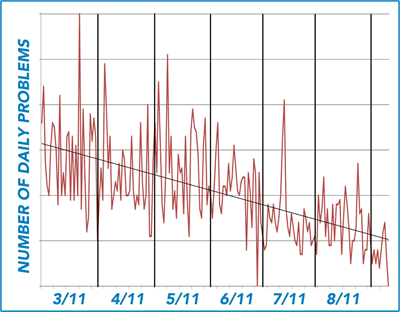
|
 Systems
Integration Jeff Littlejohn (shown in photo) talked about the “Care
and Feeding of Streaming Audio,” highlighting Clear Channel’s
efforts to ensure that their streaming audio products are as reliable
as are their over-the-air signals.
Systems
Integration Jeff Littlejohn (shown in photo) talked about the “Care
and Feeding of Streaming Audio,” highlighting Clear Channel’s
efforts to ensure that their streaming audio products are as reliable
as are their over-the-air signals.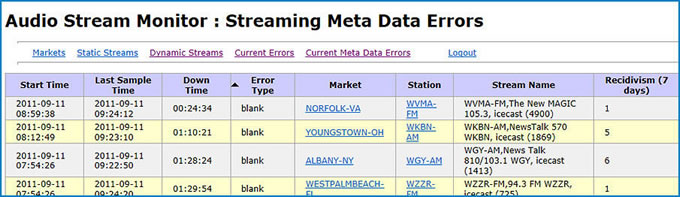
|
NAB Accepting Nomination for 2012 NAB Engineering Achievement Awards NAB is currently accepting nominations for the 2012 NAB Engineering Achievement Awards. Established in 1959, the NAB Engineering Achievement Award is presented each year to an individual for their outstanding accomplishments in the broadcast industry. In 1991, NAB began giving awards separately for achievements in radio and television. The award winners will be recognized at the Technology Luncheon at 2012 NAB Show on April 18 in Las Vegas, Nev. Additional
information and a nomination form are available on NAB's
website. The deadline for nominations is January 23, 2012.
The November 14, 2011 Radio TechCheck is also available in an Adobe Acrobat file. Please click here to read the Adobe Acrobat version of TV TechCheck. |


ADVERTISEMENTS